How to protect plants from frost
A few habits that get tender plants safely through a cold night.
1. Know the risky nights
Frost bites hardest on a clear, still night, when the day's heat escapes straight to the sky. Cloud and wind hold it off. Watch for a forecast overnight low near or below 0 °C, and treat 3 to 4 °C as a ground-frost risk too, because the ground cools faster than the air.
2. Cover tender plants before dusk
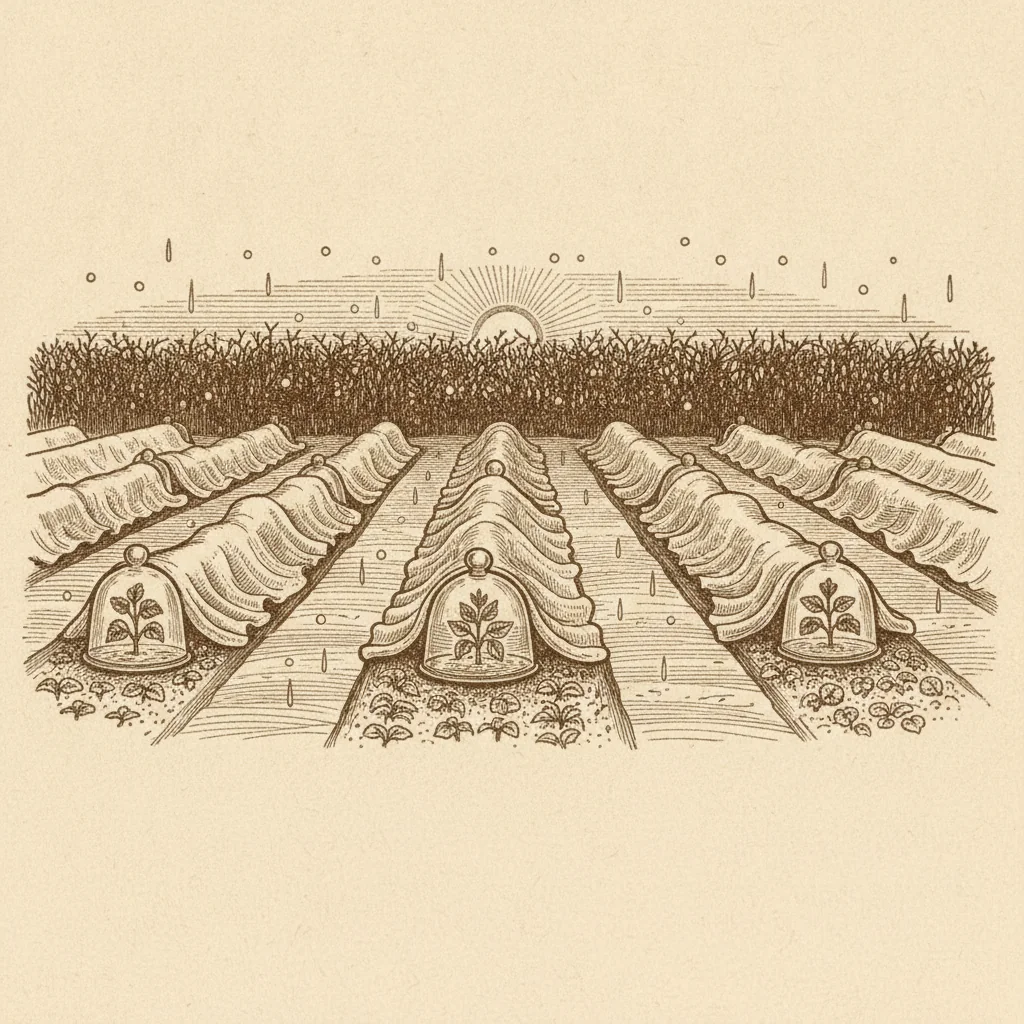
Drape horticultural fleece, an old sheet, or cloches over tender plants in the late afternoon, before the temperature drops, so you trap the warmth already in the soil. Lift the cover in the morning so the plant gets light and air, and so it does not cook on a sunny day.
3. Move pots to shelter
Containers freeze faster than open ground, because cold reaches the roots from every side. Move them against a house wall, into a greenhouse, porch or shed, or group them together and wrap the pots with fleece or bubble wrap. The roots, not the leaves, are what you are saving.
4. Water the soil in the morning, not at night
Lightly moist soil holds more daytime warmth than dry soil and gives it back overnight. If a frost is forecast, water in the morning so the soil is charged and the foliage is dry by nightfall. Never water tender plants in the evening before a freeze.
5. Hold off planting tender things out
Do not plant tender crops and bedding (tomatoes, courgettes, dahlias, beans) outside until the frosts have passed. In most of the UK that means late May, later in the north and in cold valleys. One late frost will undo an early start, so harden plants off and wait.
6. Mind the frost pockets
Cold air sinks and pools at the bottom of slopes and behind solid walls and fences. The lowest, most enclosed corner of a garden frosts first and hardest. Keep your tenderest plants out of it, and leave a gap at the base of a fence so cold air can drain away.
7. Leave the hardy plants alone
Established hardy plants and most shrubs shrug off frost, so fussing over them wastes effort and fleece. Some crops, like parsnips, leeks and kale, even taste sweeter after a frost. Protect the tender and the borderline, not everything in the garden.
Wondering which crops actually mind, and when to expect your first frost? Mr Nodiggity has a longer guide on what dies, what sweetens, and what is worth covering.
Check tonight's frost risk